In an increasingly complex energy landscape, the regasification of liquefied natural gas (LNG) represents a strategic infrastructure for the diversification of energy sources in Italy.
The Ravenna FSRU terminal, with a regasification capacity of 5 billion cubic meters of gas per year and a storage capacity of 170,000 cubic meters of liquefied gas, is a project of great significance both for the volumes it handles and for the strategic location of the facility, situated 8.5 km off the Ravenna coast.
The complexity of an infrastructure of this kind requires that all operational components of the station be secured: from the BW Singapore regasification vessel to the support units and the LNG tankers responsible for transporting the gas.
Resinex, commissioned by Micoperi on behalf of Snam, contributed to the project by supplying marine marking systems and a complete mooring system, designed to support the operations of the service units and to delimit the terminal’s operational areas.

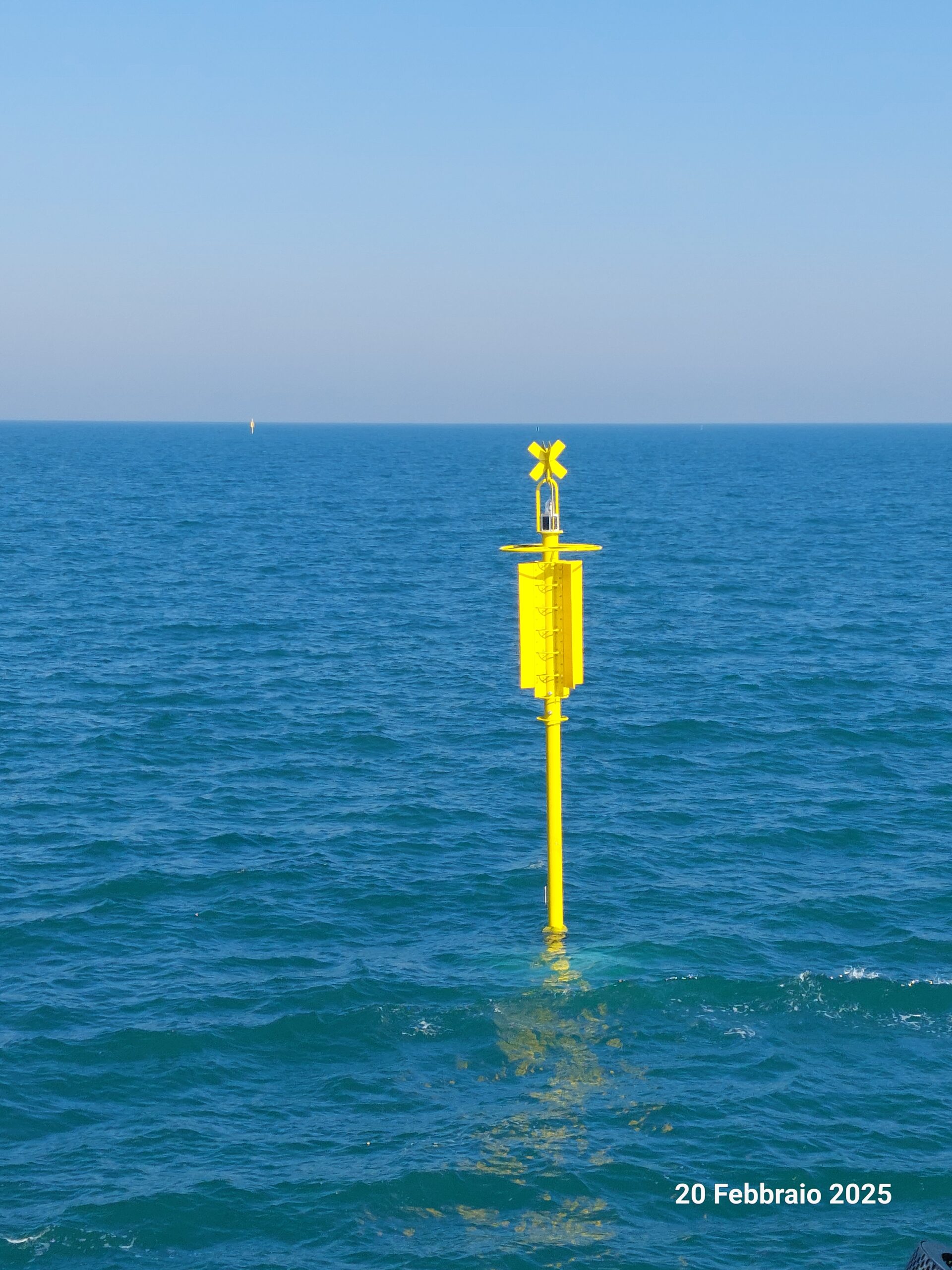
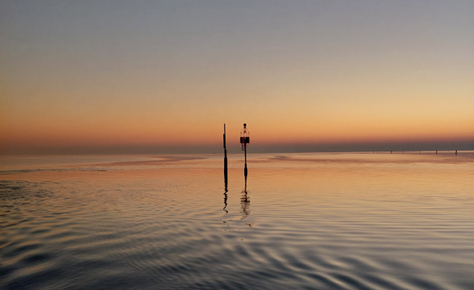
The Resinex supply includes nine elastic beacons, installed to delimit the operational areas of the offshore terminal.
The configuration includes three special-purpose elastic beacons, with a yellow St. Andrew’s cross (X) topmark, installed at a water depth of 14 meters and with a focal plane of 6 meters, intended to delimit the safety area where LNG tankers are intercepted by tugboats.
In addition to these, the supply includes also six lateral elastic beacons, three green and three red, installed at depths of 14, 16 and 18 meters, each with a 6-metre focal plane, marking the entrance to the terminal’s operational areas.
The lanterns installed are the Resinex-Co.Se.Ma CL 301 model, featuring GPS-synchronized flashing and visibility of up to 6 nautical miles, a solution that ensures coordinated and easily recognizable signaling even in conditions of reduced visibility.
Configured in accordance with IALA recommendations, this marking system ensures clear identification of operational perimeters, enhancing navigational safety and the management of maneuvers within the terminal.
Another important element of the supply is the mooring system dedicated to tugboats: four mooring buoys allow support units to remain stably positioned in the vicinity of the BW Singapore vessel, avoiding the need for temporary anchorage on the seabed.
The mooring buoys supplied are model E15x850, with a diameter of 1,450 mm and a height of 850 mm, a SWL of 17 tonnes and a net buoyancy (NB) of 1,050 kg — specifications that allow the safe mooring of tugboats even in demanding operating conditions.
Each buoy is equipped with a lantern with a range of 3 nautical miles, ensuring high visibility even in difficult weather conditions.
The mooring system is completed by four spherical buoys in linear polyethylene with a diameter of 500 mm and a net buoyancy of 55 kg, which serve as pick-up points for the mooring chain connected to the main buoy. Watch the pick-up video: https://youtube.com/shorts/A-T9gxYSLf0?feature=share
Within the Ravenna FSRU project, tugboats play a fundamental role: they assist the regasification vessel during positioning operations and, most importantly, intercept incoming LNG tankers, controlling their speed and trajectory during approach and stabilising them during ship-to-ship berthing operations.
The Ravenna FSRU project confirms Resinex’s ability to operate in complex, high-responsibility offshore environments, providing tailored integrated mooring and marking solutions for strategic energy infrastructure.